


C olleges market themselves as global institutions. They promote the cultural and economic value of international students, highlighting the...
Colleges market themselves as global institutions. They promote the cultural and economic value of international students, highlighting the $43.8 billion they contributed to the U.S. economy in 2023-24 and the more than 378,000 jobs they supported. Education-related travel is now the seventh-largest U.S. service export, according to the Department of Commerce. At the same time, international student-athletes remain locked out of the name, image and likeness (NIL) economy. Under NCAA policy, athletes are allowed to earn money through personal brand deals, sponsorships, appearances, and social media monetization. But for international students, those same activities can jeopardize their visa status.

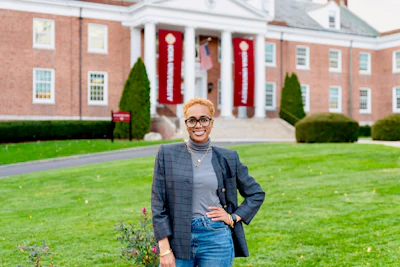
Ajah Hawley-Alexander
Visa Rules Do Not Match the Structure of College Sports
F-1 holders are allowed to work only in narrow, pre-approved ways: campus jobs, internships tied directly to academic programs, or temporary post-graduation work. NIL deals don’t fit those models. Even royalties and licensing fees, often classified as passive income, become problematic when the athlete is actively promoting a brand or content.
Universities have offered little clarity. Some compliance staff quietly tell international athletes to avoid NIL deals altogether. Others try to limit NIL activity to students’ home countries during breaks. Neither approach confronts the fact that colleges rely on these athletes while denying them equal footing in the NIL economy.
International Athletes Are Core to College Success
• 64% of Division I men’s tennis players
• 61% of women’s tennis players
• 38% of men’s ice hockey players
• 34% of men’s soccer players
They drive performance, elevate visibility, and contribute to revenue. In 2022 alone, Division I programs added more than 250 international men’s soccer players and 300 international women’s tennis players. These athletes matter, yet the benefits of NIL remain out of reach.
The House v. NCAA settlement authorizes direct payments from schools to student-athletes. But no federal agency has clarified whether international students can accept those payments without violating their visas. Colleges face legal risk, and athletes are caught in a policy gap with no clear resolution.
Surveillance Threatens More Than Speech In 2025
In 2025, the federal government tightened scrutiny of international students by expanding social media vetting. Visa applicants must now make their accounts public, report political activity, and accept lower priority if enrolling at institutions with high percentages of international students. Several hundred visas have already been revoked based on perceived ideological threats.
Athletes with large social followings are particularly exposed. NIL deals often require social media promotion, but international students risk visa complications if their online presence includes content interpreted as political. They can be penalized for speech that would be protected if made by a U.S. citizen.
Constitutional protections do apply to noncitizens physically in the U.S., but immigration officers retain wide discretion at the border and during visa processing. That discretion can, and often does, override legal nuance.
State Laws Narrow the Field Further
Some state-level NIL laws prohibit athletes from endorsing “vice industries” such as alcohol or gambling, even if legal in that state. These restrictions typically apply to promotional speech, which complicates the already limited NIL landscape for international students.
Combined with federal surveillance, these laws create legal risk with no clear guidance. An athlete posting about a controversial issue, even one unrelated to NIL, might trigger institutional review or visa scrutiny.
Visa Costs and Bureaucratic Barriers Are Growing
By 2026, international students will pay an additional $250 Visa Integrity Fee. Expanded interview protocols give consular officers broader discretion to deny visas based on perceived attitudes or political leanings. In May 2025, the number of issued F-1 visas dropped to its lowest in three years.
Meanwhile, the college sports economy continues to professionalize. NIL payments are becoming normalized. Collectives, agents, and sponsors are embedding themselves in recruiting. And international athletes remain locked out by laws that predate the entire NIL era.
Institutions Have the Power to Act
Universities benefit from international athlete recruitment. They cannot claim ignorance about the constraints these students face. If they want the wins, the exposure, and the revenue, they must also take responsibility for equitable support.
That requires:
• Hiring immigration counsel to design NIL compliant protocols
• Auditing internal policies to close compliance gaps
• Creating NIL-abroad options for students to monetize from their home countries
• Training coaches and compliance officers on NILimmigration intersections
• Engaging in legislative advocacy to push for updated visa policies
These implementations are baseline commitments for any institution that claims to value equity and global inclusion.
Equal Opportunity Requires Institutional Will
International student-athletes are central to the success of many college teams. They contribute to the same revenue streams and face the same physical demands. They should have access to the same economic opportunities. NIL was not created to benefit only domestic students. Yet without intervention, that is the reality. This is deliberate exclusion. Schools recruiting international athletes without addressing these barriers are enabling it.
Ajah Hawley-Alexander is a clinical lecturer at Iona University and a doctoral candidate at the University of Southern Mississippi
from The EDU Ledger https://ift.tt/x1pjCXw
via IFTTT

COMMENTS